News

20 November 2024

Ala and Bogdan, mother and son, have been in Mykolaiv for a month. Their home in Kherson is almost completely destroyed. Ala's husband, Bogdan's father, died at the front a few months ago. Ala held her husband's funeral alone. She has no one left here: all her relatives have fled Ukraine, and she dreams of leaving too. She hopes to go to Poland, but she needs money for a passport and time to learn the language.
Ala has the eyes of someone crushed by life, exhausted by a war that destroys almost everything. She never looks away from me, and her eyes cry out in pain.
And yet, every day at the center in Mykolaiv, Ala cooks for all of us, making sure we've eaten.
Bogdan is always playing with his scooter. He is a child of war—one of those who no longer dream of becoming an astronaut or imagining their future; he simply doesn't dream anymore. His eyes are flat, fixed on the only tangible reality he knows: playing with his scooter and holding on to his mother.
Bogdan is 9 years old. He desperately needs to see that there is more to life beyond the war, his father's death, his destroyed home, and his scooter. He needs to know that he, too, can dream of becoming anything he wants—that there is a future for him. Bogdan needs the gaze of a child who believes in dreams again.

Read more ...

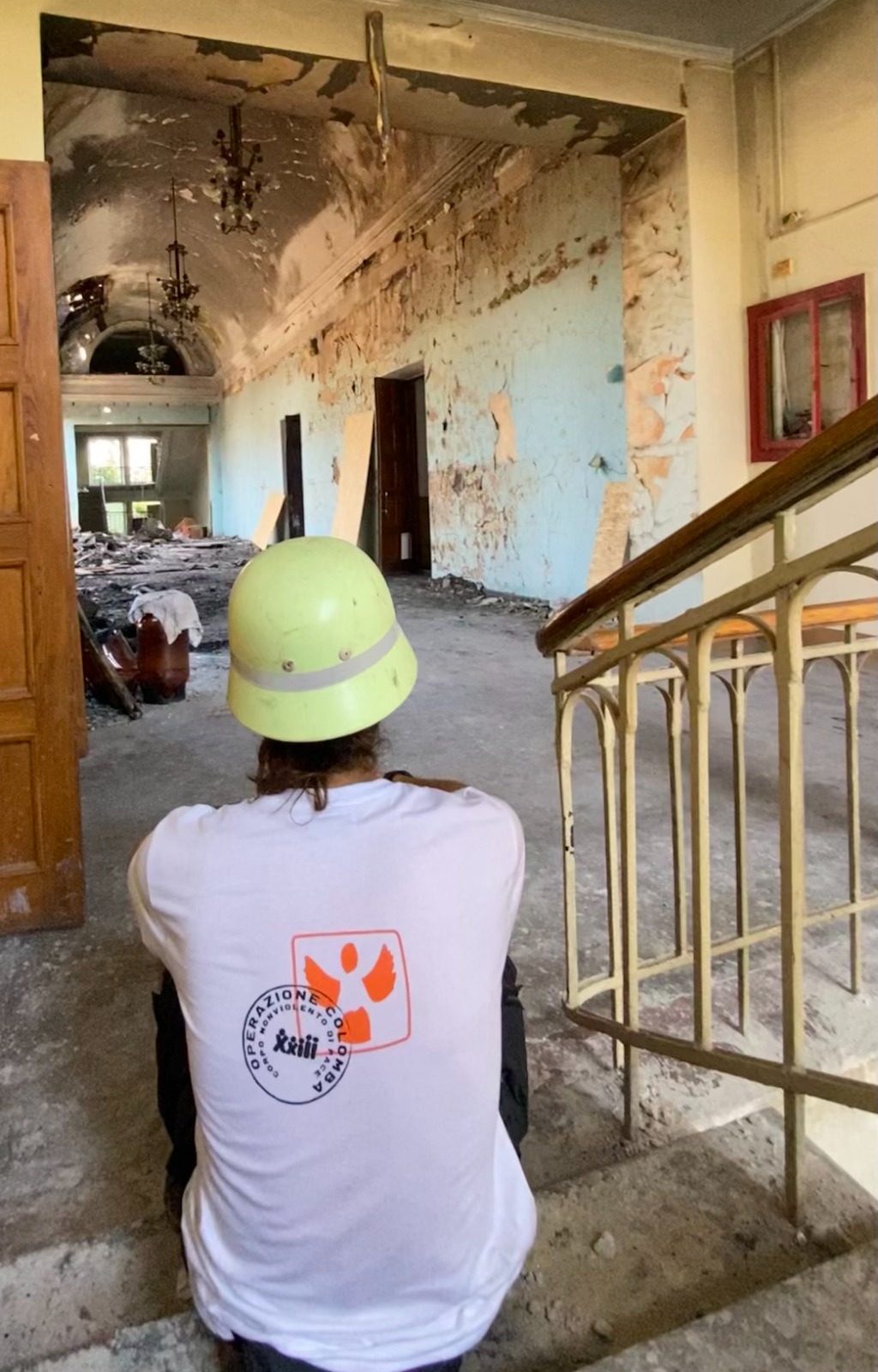
We have been living in Ukraine since the beginning of the war, together with peolple escaping from bombings, initially in Lviv and Odessa, then in the underground shelters of Mykolaïv; now at the front in Kherson.
The words and music of this song were born living with people who respond to war with solidarity and gain courage by living together.

I left to try to give a concrete Peace response to the war.
Here, after more than a year, young people are tired: they were resisting and looking for a different way but now they are giving up, they think it's not working, they don't see great results and they believe that the only thing left to do is to enlist.
To fight, so that the war ends as soon as possible or just to avoid being pervaded by a sense of futility.
So, I asked myself what the next step was, how to help them not to give up.
What concrete step can they take against the war?
Actually, they are already doing it, they are taking big steps against violence, but they need to be told!
The part that is missing is mine.
We alone do not see things; the other people make us see.I have to tell their life, and tell them that I see it, that their resistance is the great cry that they want to live and they do not want war.
They are living and not fighting with weapons, and that is right!
They are living by sharing what little they have in their destroyed villages.
They are seeking Peace, they have already created it, they are living it.

Read more ...


Vika is 18 years old. We met her in Mykolaiv two months ago at the community shelter where we live. She arrived from Kherson with her mother.

Today our meeting with Andrej begins with smiles and a piece of cake. He is a volunteer from the local Caritas who decided to help his people from the beginning of the war, even though he expected to do something else in his life.
We went to meet him because we wanted to tell him that we are not only here for them, but WITH them. In a city under attack, we are volunteers who are working nonstop to help civilians in all the ways they can since many months: from distributing food aid to delivering warm clothes in view of the gelid winter that is coming.
Suddenly, during the conversation, he is pleasantly surprised when we speak some words in Ukrainian and Russian languages. So, with his permission, we ask him some personal questions like why most people in these areas of the country continue to speak Russian.
"Russian is my mother language. I was born in Odessa but my grandparents have Russian origins, like "many" people in Ukraine. Since the war’s outbreak in 2014, we have started to use more the Ukrainian language, which has been chosen as the only official language in schools".
He goes on telling us that it is impossible to have such an immediate change between the two languages because they are not at all the same, although they are similar. From the beginning of the war until today, many people - especially in the western regions - began to distance themselves from Russia and to speak Ukrainian.

Read more ...
Page 2 of 3